California Cell Phone Driving Laws 2026: What's Allowed, Fines, and Rules
California was one of the first states to ban handheld cell phone use while driving, in 2008. The law has been updated several times since. What's allowed and what isn't is more specific than most drivers realize, and the fines: while modest on paper: come with penalty assessments that make the real cost much higher.
Table Of Contents
- 1. The current law: what California prohibits
- 2. What the fines actually cost
- 3. Special rules for teen drivers
- 4. Why distracted driving is more dangerous than it feels
- 5. What counts as "hands-free" in California
- 6. Practical tips for staying legal
- 7. California compared to other states
- 8. Smartwatch use while driving
- 9. Dashcam and GPS mount rules
- 10. If distracted driving causes a crash
- 11. Your employer and distracted driving
- 12. New technology and what's coming
- 13. Safe phone habits behind the wheel
The current law: what California prohibits
Two sections of the California Vehicle Code govern cell phone use while driving:
Only 1% of California drivers answer all 3 correctly
Think you know the rules? Most licensed drivers miss at least one.
At 60 mph on a dry California freeway, what is the recommended minimum following distance?
Vehicle Code 23123 (enacted 2008) prohibits holding and using a cell phone for any purpose while driving. This includes making calls, checking GPS, scrolling, or holding the phone in your hand for any reason. Hands-free use through a Bluetooth earpiece or speakerphone with the phone mounted or in a holder is permitted.
Preparing for your DMV test?
Download our free iOS app — 1,164+ practice questions in 11 languages, flashcards, and offline study!

Vehicle Code 23123.5 (enacted 2009, updated 2017) prohibits writing, reading, or sending text messages while driving, including reading notifications. Even a quick glance at an incoming text at a red light counts as a violation if the phone is in your hand.
Since January 1, 2017, the rules tightened further. California now requires that any phone use while driving be:
- Hands-free (no holding the phone)
- Mounted on the windshield or dashboard in a commercial mount (not resting on your lap or in a cup holder)
- Operated with a single swipe or tap to activate or deactivate a feature
That last point matters. You can tap the phone once to answer a call or start navigation. You cannot scroll through your contacts or type a destination while driving. If doing it requires more than one touch, pull over.
What the fines actually cost
The base fines for phone violations are modest:
- First offense: $20 base fine
- Second and subsequent offenses: $50 base fine
The actual amount you pay is much higher. California adds a series of penalty assessments and surcharges on top of base fines, which can multiply the total by four to six times. A first-offense cell phone ticket with all assessments typically runs $150 to $200. A second offense can reach $250 or more.
Since 2021, a second phone violation within 36 months also adds one point to your driving record. Points lead to higher insurance premiums and can eventually trigger a license suspension if enough accumulate.
Special rules for teen drivers
Drivers under 18 with a provisional license face a stricter standard: no phone use while driving at all, even hands-free. California Vehicle Code 23124 prohibits provisional license holders from using any mobile device while driving, regardless of whether it's mounted, hands-free, or a single tap. The one exception is an emergency where calling 911 is necessary.
A first offense for a teen driver is a $20 base fine (same as adults), but the point consequences apply earlier, and violations can affect the provisional license restrictions.
Why distracted driving is more dangerous than it feels
Glancing at your phone for 5 seconds at 60 mph covers about 440 feet: roughly the length of a football field and a half. You are blind to everything that happens in that distance. A child stepping off a curb, a car stopping short ahead, a cyclist in your lane: all of these can and do happen in 5 seconds.
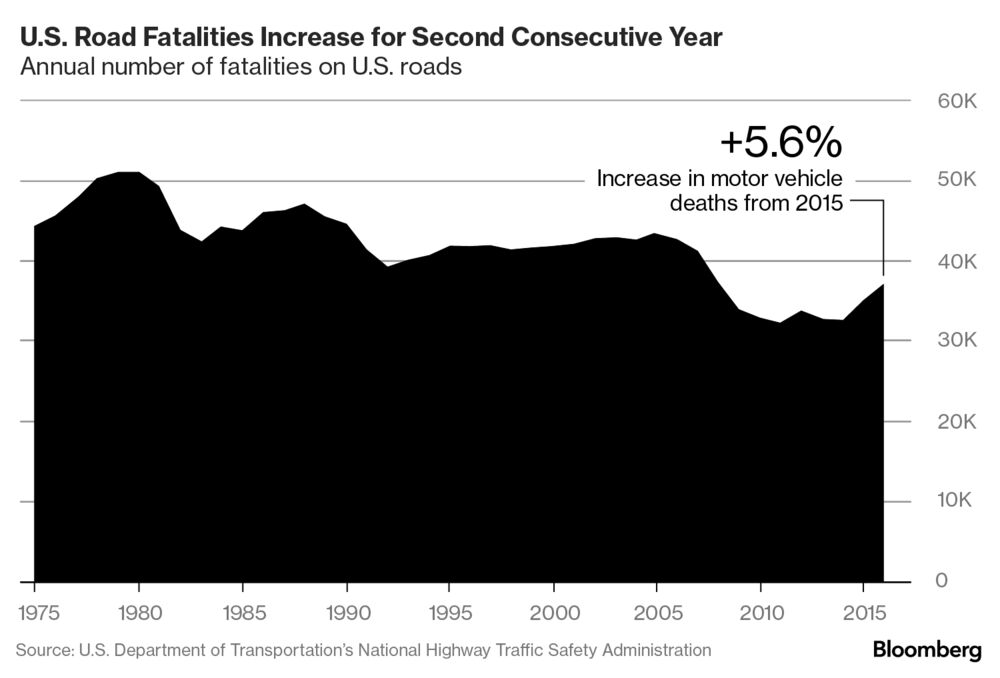
The National Highway Traffic Safety Administration estimates distracted driving kills about 3,100 people per year in the United States. The actual number is likely higher because distraction is often not reported in crash investigations when the driver survives.
What makes smartphones different from older distractions (eating, adjusting the radio) is that they demand sustained visual attention, not just a glance. Reading a text requires reading: your brain can't do that and monitor the road simultaneously. Neither can it navigate an app while tracking traffic.
What counts as "hands-free" in California
Hands-free in California means the phone is in a mount and you are not holding it. Specific scenarios:
- Phone in a dashboard mount, using voice navigation: legal
- Phone on your lap with earpiece connected: illegal (phone is not mounted)
- Speakerphone with phone sitting on the seat: illegal (phone is not mounted)
- Bluetooth call through the car's audio system with no phone in hand: legal
- Apple CarPlay or Android Auto through the dash screen with a single tap: legal
- Typing a destination into a mounted phone while stopped at a red light: illegal (you must be parked off the roadway)
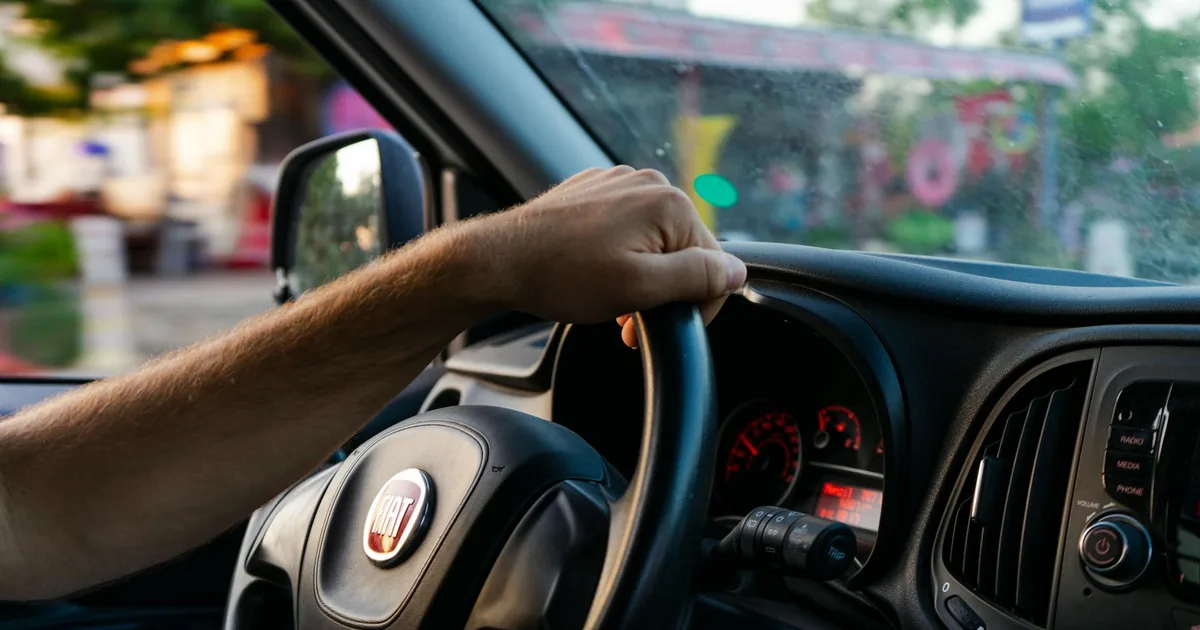
The mount must be in a location that doesn't obstruct your view. On the windshield, it must be in the lower right corner (passenger side) or within a 7-inch square in the lower left corner (driver side). Not blocking your view through the glass.
Practical tips for staying legal
Set your GPS before you put the car in drive. If you need to change the destination, pull into a parking lot. Enable Do Not Disturb While Driving in your iPhone settings or Android's driving mode: it silences notifications and sends auto-replies so you're not tempted to check a message. If someone needs to reach you urgently, they can call twice in a row; most phones are configured to let calls through on the second attempt.
If you feel the urge to check your phone, the quick fix is to put it in the back seat. Out of reach and out of sight works better than willpower.
For the full set of California traffic laws tested on the DMV written exam: including cell phone rules, right-of-way, speed limits, and more: use our free California DMV practice tests. They cover every topic in the California Driver Handbook and are a good refresher even for experienced drivers.
California compared to other states
California is one of 24 states with a complete hands-free law. Many states still allow holding a phone while driving as long as you're not texting. When you drive in other states, check local rules: what's legal elsewhere may be a ticket in California, and what's legal in California may be illegal elsewhere (some states restrict even mounted phone use).
Smartwatch use while driving
Smartwatches occupy a legal gray area in California. Vehicle Code 23123 specifically names "wireless telephone" and "electronic wireless communications device." Smartwatches are not explicitly listed, and courts have not consistently ruled on them.
Practically speaking: if you're reading messages on your watch screen while driving, law enforcement can and does issue citations under the general distracted driving provisions. The safest interpretation is to treat your smartwatch like your phone. Leave it on do-not-disturb while driving and glance only at quick notifications (like a timer alert), not at incoming messages or navigation.
Dashcam and GPS mount rules
Dashcams are legal in California as long as they don't obstruct your view. Vehicle Code 26708 governs what you can attach to your windshield: dashcams must be mounted in a 7-inch square in the lower corner on the driver's side, or a 5-inch square in the lower corner on the passenger side. Mounting a dashcam in the center of the windshield, where it blocks part of your line of sight, can get you cited.
GPS devices and phone mounts follow the same rules. The mount must stay in the permitted zones. A large phone mount stuck in the center of your windshield is technically illegal in California even if it doesn't feel like it's obstructing anything.
If distracted driving causes a crash
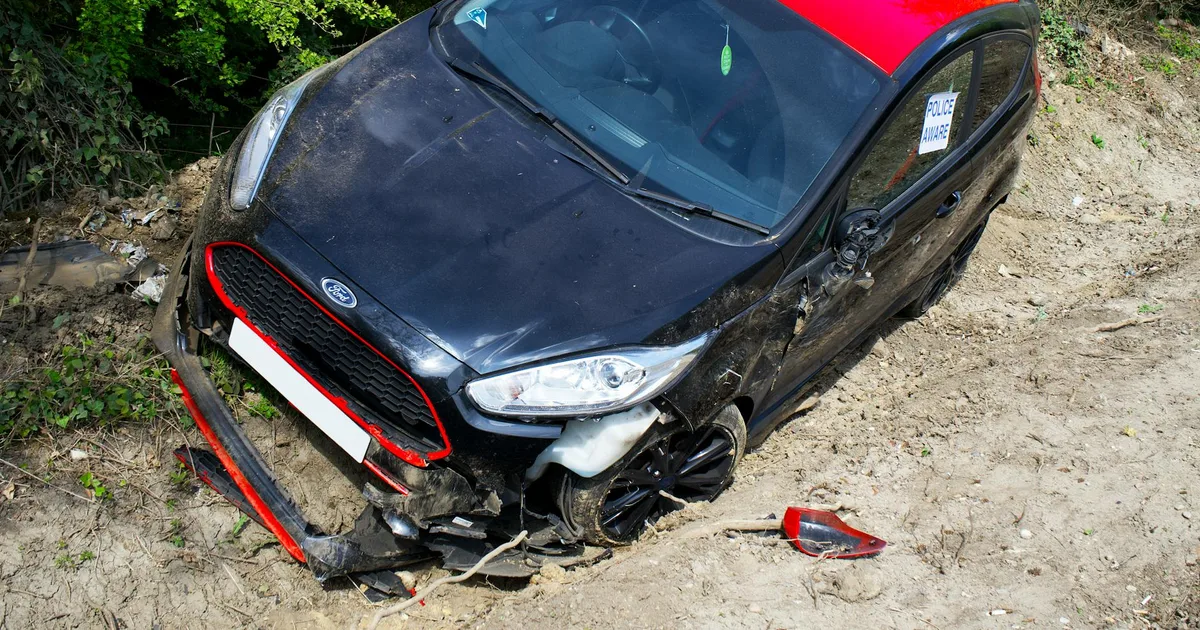
California doesn't have a standalone "distracted driving causing injury" criminal statute. But the consequences of causing a crash while distracted can be severe depending on the severity of the crash.
A crash resulting in injury can lead to a civil lawsuit for damages. Your insurer typically handles this up to your policy limits, but if damages exceed those limits, you pay the difference personally. If the distracted driving was particularly reckless (running a red light while texting), a prosecutor can charge reckless driving under VC 23103, which carries fines and possible jail time.
In a fatal crash where distracted driving was a cause, gross vehicular manslaughter while intoxicated (if substances were involved) or even vehicular manslaughter charges may apply. The threshold for "criminal negligence" is not high when phone data shows the driver was actively using their phone at the moment of impact.
Your employer and distracted driving
If you drive for work: deliveries, sales calls, rideshare, or any job requiring driving: and you get into a crash while using your phone, your employer may share liability. California courts have held employers liable for employee actions during the course of employment, including crashes caused by phone use. Many companies now have official cell phone policies for drivers, and drivers who violate those policies may face discipline beyond the traffic citation itself.
- VC 23123: Prohibits holding and using a cell phone for any purpose while driving. Hands-free use via Bluetooth or a mounted holder with a single tap is permitted.
- VC 23123.5: Specifically prohibits writing, reading, or sending text messages while driving, including glancing at a notification at a red light while holding the phone.
- VC 23124: Applies to drivers under 18: they may not use a cell phone in any manner while driving, including hands-free.
- Fines are small on paper ($20 first offense, $50 second) but penalty assessments add up to roughly $149 and $256 respectively after court fees.
New technology and what's coming
Several states have started exploring hand-detection systems that ticket drivers automatically for holding a phone. California hasn't adopted these yet, but the direction of enforcement is clearly toward stricter automated detection rather than relying solely on officer observation.
In the meantime, the most effective safety tool already exists on most smartphones: the built-in driving mode. On iPhone, it's called "Driving Focus." On Android, it's "Driving Mode." Set it to activate automatically when your phone detects you're in a moving vehicle. It silences notifications, blocks most apps, and sends auto-replies. You can still receive emergency calls. It costs nothing and requires no willpower.
Safe phone habits behind the wheel
- Mount your phone on a dashboard or windshield holder before you start the car
- Enable Do Not Disturb While Driving (available on both iOS and Android): it suppresses notifications automatically
- Set your GPS destination before pulling out of the parking spot
- Use Bluetooth or hands-free earbuds for calls: single-tap to answer is permitted
- Pull completely off the road and stop before reading a message or making a call
- Respond to texts after parking: California counts checking your phone at a red light as a violation if you're holding it
- Don't hold your phone even briefly: any handheld use while the car is in motion is a violation
- Don't check notifications at a red light while holding the phone: stopped at a light is still "driving" under California law
- Don't let the phone rest in your lap and glance at it while driving: officers issue citations for exactly this
- Don't use a Bluetooth earpiece if you're under 18: minors may not use any phone function while driving
- Don't rely on voice-to-text by holding the phone up while dictating: the phone must be mounted
- Don't assume a speakerphone call is legal if you're still holding the phone: it isn't
Enforcement of these rules peaks every April during Distracted Driving Awareness Month, when CHP and local departments run extra patrols.