14 Tips for Passing Behind-The-Wheel Test in California
TL;DR: Most California behind-the-wheel tests are passed (or failed) on a small number of execution details: complete stops, mirror checks, parallel parking technique, lane discipline, smooth braking, and pre-drive confidence. These 14 tips cover every category on the DL-955 score sheet, with specific techniques for each maneuver. Combined with regular practice, this is the playbook examiners reward.
Tip 1: Full stop at the limit line, every single time
Even at empty intersections, the wheels must visibly stop. Count "one Mississippi, two Mississippi" in your head before easing forward. Rolling stops are the #1 critical-error reason and an automatic fail.
Only 1% of California drivers answer all 3 correctly
Think you know the rules? Most licensed drivers miss at least one.
At 60 mph on a dry California freeway, what is the recommended minimum following distance?
Tip 2: Stop AT the limit line, not past it
The white limit line is where you stop. If there is no limit line, stop at the crosswalk. If no crosswalk, stop before entering the intersection. Stopping past the limit line counts as a stop/yield error every time.
Preparing for your DMV test?
Download our free iOS app — 1,164+ practice questions in 11 languages, flashcards, and offline study!

Tip 3: The Mirror, Blind Spot, Signal sequence: in that order
Before any lane change or turn:
- Mirror (rear-view + appropriate side)
- Blind spot (head turn)
- Signal (and wait at least 2 seconds)
- Execute the maneuver
The examiner specifically watches for the head turn: they cannot mark "observation" credit if your head stays fixed forward.
Tip 4: Pace traffic, never lead
Drive at the speed of the cars around you (within 5 mph of the posted limit). Being 10 mph below the limit is just as bad as 10 over: both trigger Speed errors. If traffic is moving at 25 mph in a 35 zone, match traffic.
Tip 5: Maintain 3-second following distance
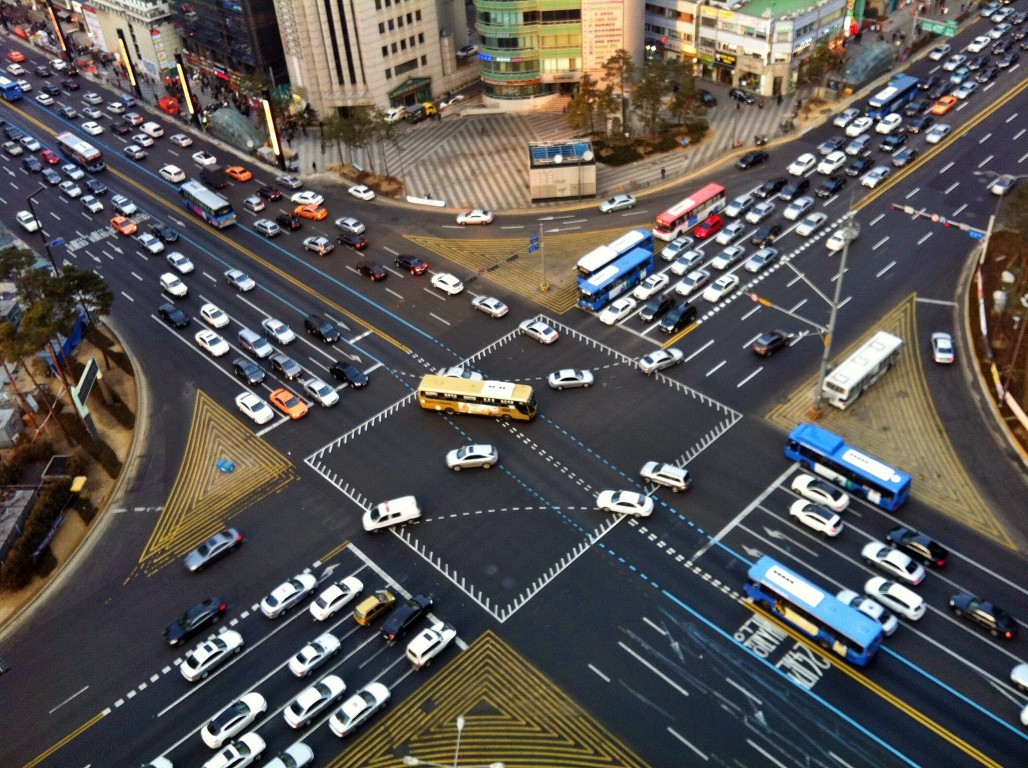
Pick a fixed object (sign, lamppost). Count "one-thousand-one, one-thousand-two, one-thousand-three" between when the car ahead passes it and when you pass it. If you reach the marker before "three," back off.
Tip 6: Smooth braking, never abrupt
Press the brake gradually as you approach a stop. The examiner should not be jolted forward. Practice "two-pedal" stops: light initial pressure, then ease off slightly just before fully stopping for a smooth halt.
Tip 7: Parallel parking: 6 steps
- Pull alongside the front car, mirrors aligned, about 18 inches from the front car
- Reverse straight back until your rear bumper aligns with the front car's rear bumper
- Turn the wheel hard right (or left, depending on the curb side) and reverse at idle
- When the car is at about 45 degrees, straighten the wheel and continue reversing
- Turn the wheel hard left (or right) and pull forward to straighten
- Adjust forward / back to center within the space
The DMV allows up to 18 inches from the curb. Hitting the curb is a critical error.
Tip 8: Three-point turn (Y-turn) technique
The examiner may ask for a three-point turn to reverse direction on a narrow road:
- Signal, look both directions, pull as close to the right curb as possible
- Turn the wheel hard left and pull forward toward the opposite curb
- Stop before hitting the opposite curb. Look BOTH ways.
- Shift to reverse, turn wheel hard right, back up toward the original curb
- Stop before hitting the original curb. Look BOTH ways.
- Shift to drive, straighten the wheel, drive away in the new direction
Tip 9: Use both hands always
9 and 3, or 10 and 2: your choice but both hands stay on the wheel during normal driving. One-handed driving (resting your right hand on the gear shift, for example) is marked as a steering error.
Tip 10: Yield to pedestrians at every crosswalk
Marked, unmarked, intersection or mid-block: California gives pedestrians right of way at every crosswalk (CVC §21950). Stop before the limit line if a pedestrian is in or approaching the crosswalk.
Tip 11: Speed limits drop in school zones
25 mph when school is in session or children are present, within 500 feet of a school entrance. Examiners always route through a school zone: drop your speed when you see the school sign, not when you see kids.
Tip 12: Headlight switch position before leaving
Even on a daytime test, check that your headlights are not stuck on (which can drain the battery). Some examiners have you operate the headlights as part of the pre-drive: they want to see you confidently switch between off, parking, low beam, and high beam.
Tip 13: Do not assume right-of-way
Even when you legally have the right of way, yield if the other driver is not stopping. Defensive driving wins points; "I had the right of way" does not.
Tip 14: Stay off your phone before the test (and during)
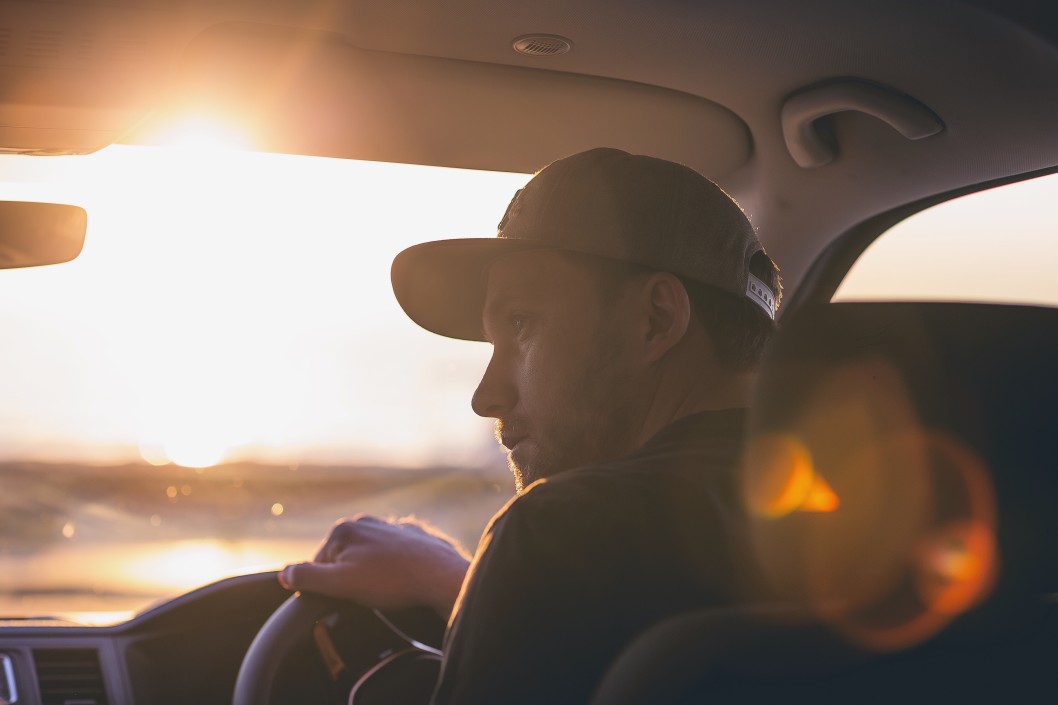
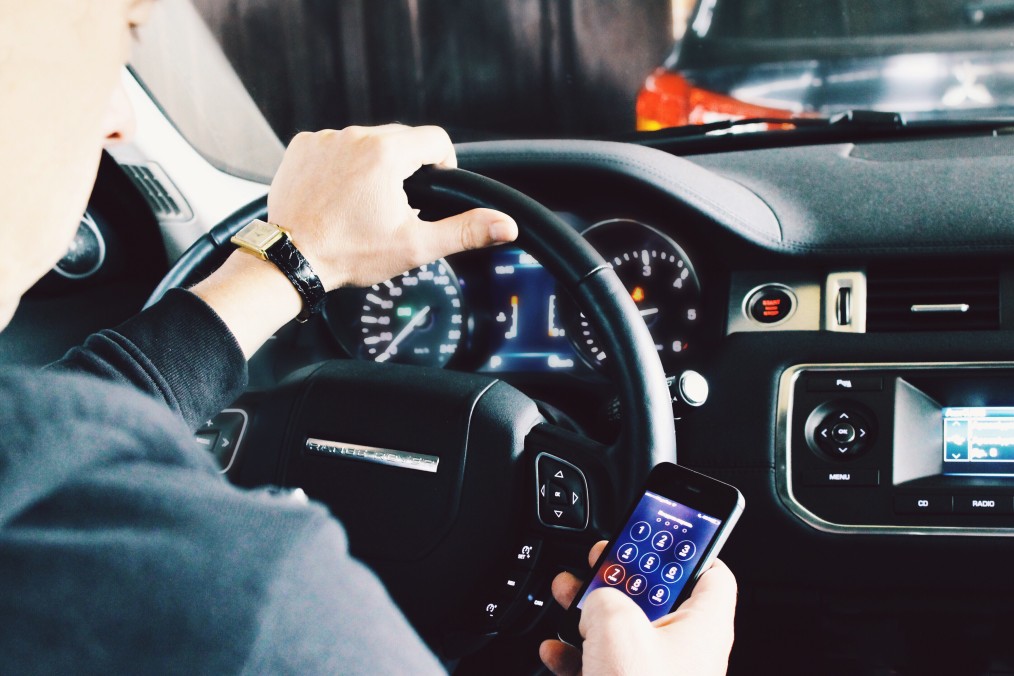
California Vehicle Code §23123.5 bans handheld phone use while driving. During the test, your phone should be silenced and out of sight. Even glancing at your phone draws a "driver behavior" critical error: automatic fail.
Bonus: Examiner instructions are clear, not tests
If the examiner says "turn right at the next intersection," they mean the next visible intersection: they will repeat the instruction if you miss it. Slow down a tiny bit if you are unsure; the examiner will not penalize you for asking once. Asking three times raises the "communication" question and can cost you points.
For 8 additional strategic tips on test-day preparation and mindset, see our 8 California driving test tips guide.
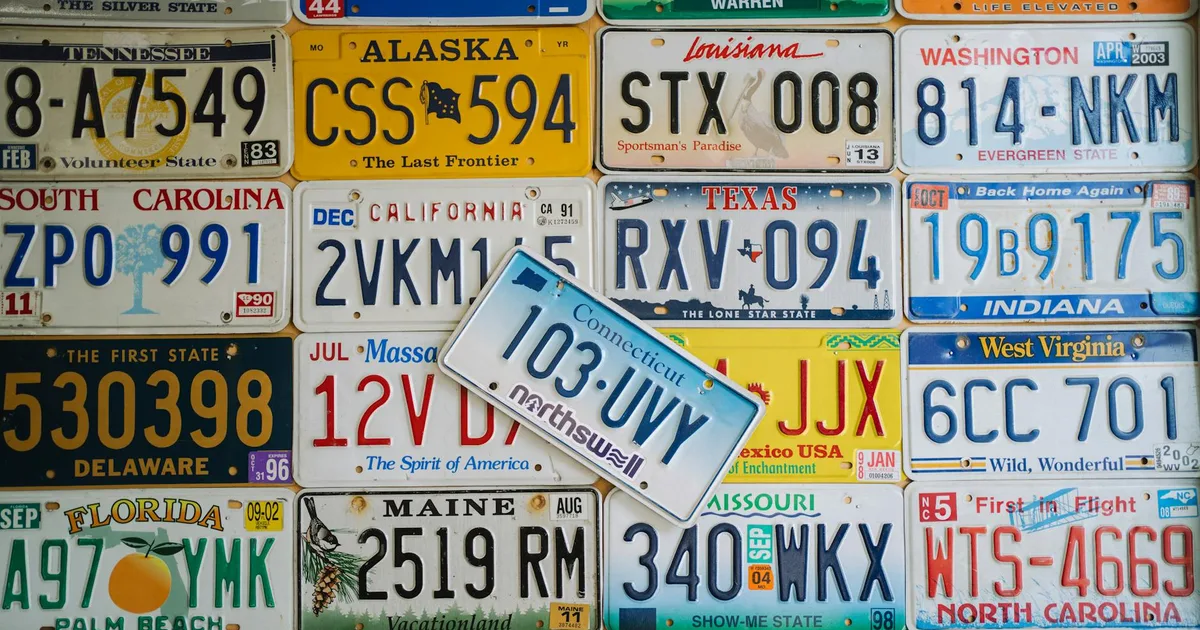
For a visual tour of every state's driver license design, see our full guide.
Watch: California DMV Practice Test 2026
46 real questions with answers and explanations — follow along or use it to study on the go.