8 California Driving Test Tips That Will Guarantee Success
TL;DR: The California behind-the-wheel test fails about 40% of first-time applicants. Most failures are not skill problems: they are habit and observation problems. This guide covers 8 strategic tips that turn a borderline driver into a confident first-time passer: full-stop habits, mirror routines, head turns, lane positioning, school zone awareness, signaling discipline, smoothness, and pre-drive checklist preparation. These come from the patterns we see most often in failed score sheets.
Tip 1: Come to a complete stop at every stop sign
The single most common automatic-fail reason in California is the "rolling stop." Even at an empty intersection, the DMV expects a full halt of at least 2,3 seconds at the limit line. The wheels must visibly stop.
Only 1% of California drivers answer all 3 correctly
Think you know the rules? Most licensed drivers miss at least one.
At 60 mph on a dry California freeway, what is the recommended minimum following distance?
"Disobeys traffic sign": failing to come to a complete stop: is one of the 9 critical driving errors. One mark in this section ends the test on the spot, regardless of how well the rest goes. Stop fully even if it feels excessive.
Preparing for your DMV test?
Download our free iOS app — 1,164+ practice questions in 11 languages, flashcards, and offline study!

Tip 2: Mirror checks before EVERY lane change and turn
The "observation" column in the scoring grid is where most non-critical marks come from. Make a deliberate mirror-blind-spot-head-turn routine that the examiner can see:
- Glance at the rear-view mirror
- Glance at the appropriate side mirror
- Turn your head briefly toward the blind spot
- Then signal and act
Examiners specifically watch for the head turn: a quick mirror check alone is not enough.
Tip 3: Maintain a 3-second following distance
Pick a fixed object (a sign, lamppost) and count "one-thousand-one, one-thousand-two, one-thousand-three" between when the car ahead passes it and when you do. If you pass it before "three," back off. Examiners mark tailgating as a stop/yield error throughout the drive.
Tip 4: Stay within 5 mph of the speed limit, both ways
The Speed critical error covers two failures: more than ~5 mph over the limit, OR driving so slowly that traffic builds up behind you. Examiners want to see appropriate speed for conditions: pace traffic on residential streets at the limit, drop to 25 mph in school zones (always, regardless of children present), and match flow on arterials.
California school zones (CVC §22352) are 25 mph when children are present OR within 500 feet of the school entrance when school is in session, regardless of whether children are visible. Examiners always include a school-zone street on the test route: never assume "no kids" means you can go faster.
Tip 5: Use turn signals early, hold them, and cancel manually
Three signal mistakes draw marks:
- Signaled too late. Less than 100 feet before the turn on residential streets, less than 200 feet on highways.
- Forgot to cancel. Signal stays on after a turn: the next driver thinks you are turning again.
- Used the wrong direction. Hand can hit the lever the wrong way under stress.
Solution: signal as soon as you commit mentally, count the seconds before the action, and verify the indicator is off after you complete the turn.
Tip 6: Hands at 9 and 3, both of them
Modern California DMV expects hands at 9 and 3 (or 10 and 2) on the wheel: both hands, almost always. The only exceptions: when shifting and when reaching to operate a control. One-handed steering during normal driving is marked as a steering error.
Tip 7: Yield to pedestrians at every crosswalk: marked or unmarked
Under CVC §21950, drivers must yield to pedestrians at every crosswalk, even unmarked ones. The DMV test route includes at least one residential intersection without painted lines: yield anyway. Stopping for an obvious pedestrian who has the right of way is the easiest way to demonstrate defensive driving.
Tip 8: Master the pre-drive checklist BEFORE the appointment
The pre-drive checklist is the first interaction with the examiner. A confident, fluent demonstration sets the tone for the whole test. Practice these items the night before so you can identify them without hesitation:
- Arm signals (left turn = straight out; right turn = bent up; slow/stop = bent down)
- Parking brake (engage and explain)
- Hazards (which button)
- Defroster (front and rear if equipped)
- Wipers on low and high speed
- Headlights on low beam and high beam
For the full 17-item checklist and what examiners expect for each, see our DPE score sheet pillar.
Bonus: Calm yourself in the parking lot
Examiner anxiety is normal. Three pre-test routines that help:
- Box breathing. 4 seconds in, 4 hold, 4 out, 4 hold. Two minutes lowers heart rate noticeably.
- Adjust seat / mirror / belt FIRST. Sit in the test vehicle 5 minutes before to find your normal position; nothing surprises you when the examiner sits down.
- Talk yourself through the first turn. "Mirror, blind spot, signal, turn." Saying it out loud once locks the habit in.
For 6 more tips, see the behind-the-wheel pillar
This guide covers the 8 highest-leverage tips. For 14 detailed behind-the-wheel techniques, including parallel parking, lane changes, and three-point turns, see our 14 tips for passing the California behind-the-wheel test.
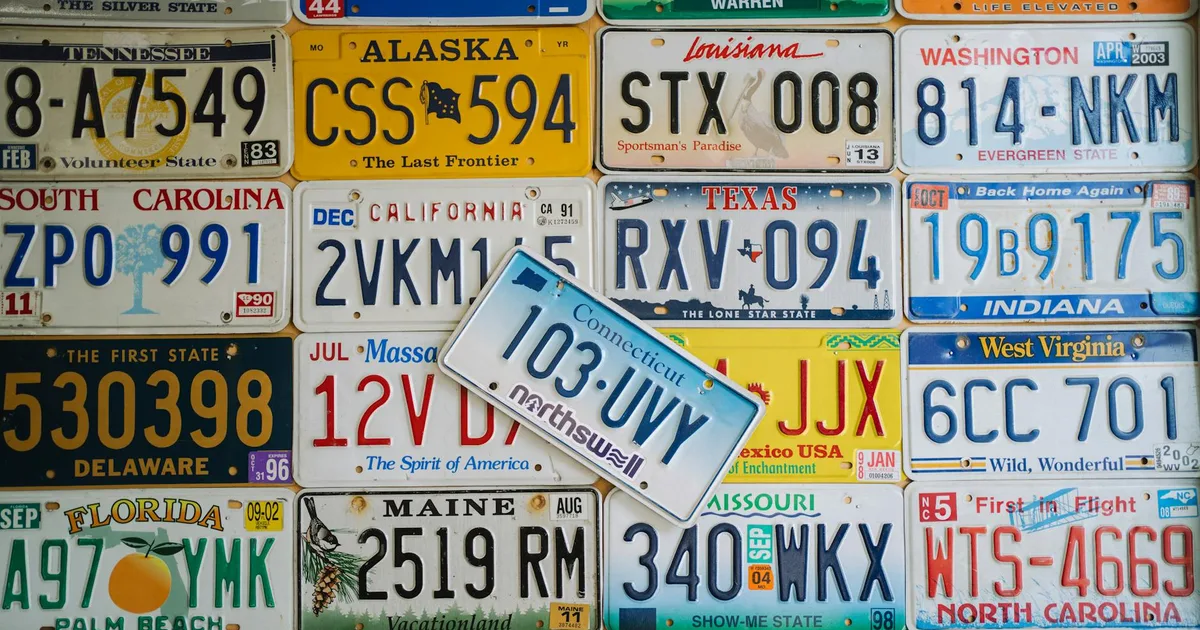
For a visual tour of every state's driver license design, see our full guide.
Watch: California DMV Practice Test 2026
46 real questions with answers and explanations — follow along or use it to study on the go.