How to get a DMV appointment in California?
TL;DR: The California DMV no longer provides counter service for registration renewals, driver's license or ID card renewals (unless your notice says otherwise), driver and vehicle records, or replacement licenses. Those are done online, at a DMV kiosk, through a DMV business partner, or by mail. An office visit is for first-time licenses, ID cards and REAL IDs, driving permits, senior renewals at 70 and older, commercial licenses, name changes, reinstatements, and drive tests. Pick your service on the official DMV appointment page and you get three options: start the application online, get in line today, or book a date. This guide covers each one, what the real wait times look like, what to bring, and how to cancel. Everything here was checked against dmv.ca.gov on October 16, 2026.
Table Of Contents
What changed at the DMV
If you last booked a DMV visit a few years ago, the system you remember is gone. The DMV's appointment page now opens with a notice that it does not provide counter service for the routine transactions that used to fill the waiting room. Renewals, records and replacement cards moved online, to kiosks, to business partners, and to the mail. What is left for the office is the list of things that need a person: document checks, photos, thumbprints, tests, and anything that changes your record.
The booking flow changed with it. You no longer search for a slot first. You pick the service, and the DMV shows you three ways to get it done: an online application to shorten the visit, a same-day virtual queue called Get in Line Now, and a date picker for a future appointment. The field office wait-times page now publishes live waits for every office, split into appointment and non-appointment lines, so you can see before you leave whether a visit today makes sense.
Preparing for your DMV test?
Download our free iOS app — 1,164+ practice questions in 11 languages, flashcards, and offline study!

- Vehicle registration renewal
- Driver's license or ID card renewal, unless your renewal notice says you must come in
- Driver and vehicle records
- Replacement driver's licenses
The DMV's own wording: these services "must be done online, at a DMV kiosk, with a DMV business partner, or by mail." Showing up for one of them means being sent to a kiosk or home. See the kiosk renewal guide for the fastest route.
Services that still need an office visit
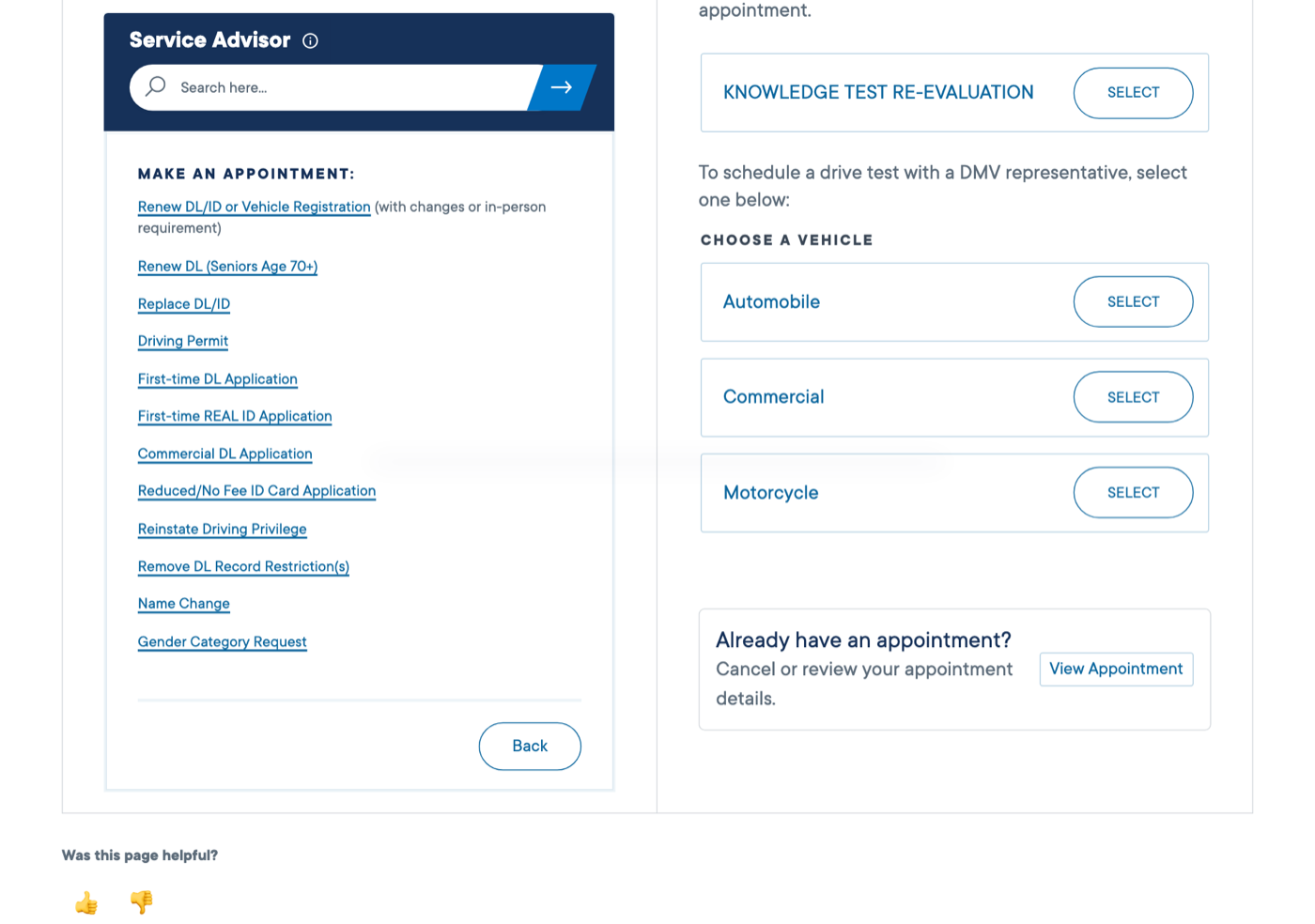
The DMV's appointment picker lists exactly what you can book. As of October 2026 the office visit menu is:
- Renew a license, ID or vehicle registration with changes or an in-person requirement
- Renew a driver's license at age 70 and older
- Replace a license or ID card
- Driving permit
- First-time driver's license application
- First-time REAL ID application
- Commercial driver's license application
- Reduced-fee or no-fee ID card application
- Reinstate a driving privilege
- Remove a restriction from a license record
- Name change
- Gender category request
Drive tests are booked separately on the same page, by vehicle type: automobile, commercial, or motorcycle. A knowledge test re-evaluation, which the DMV requests by notice, has its own expedited booking there too.
The three ways to get into a DMV office
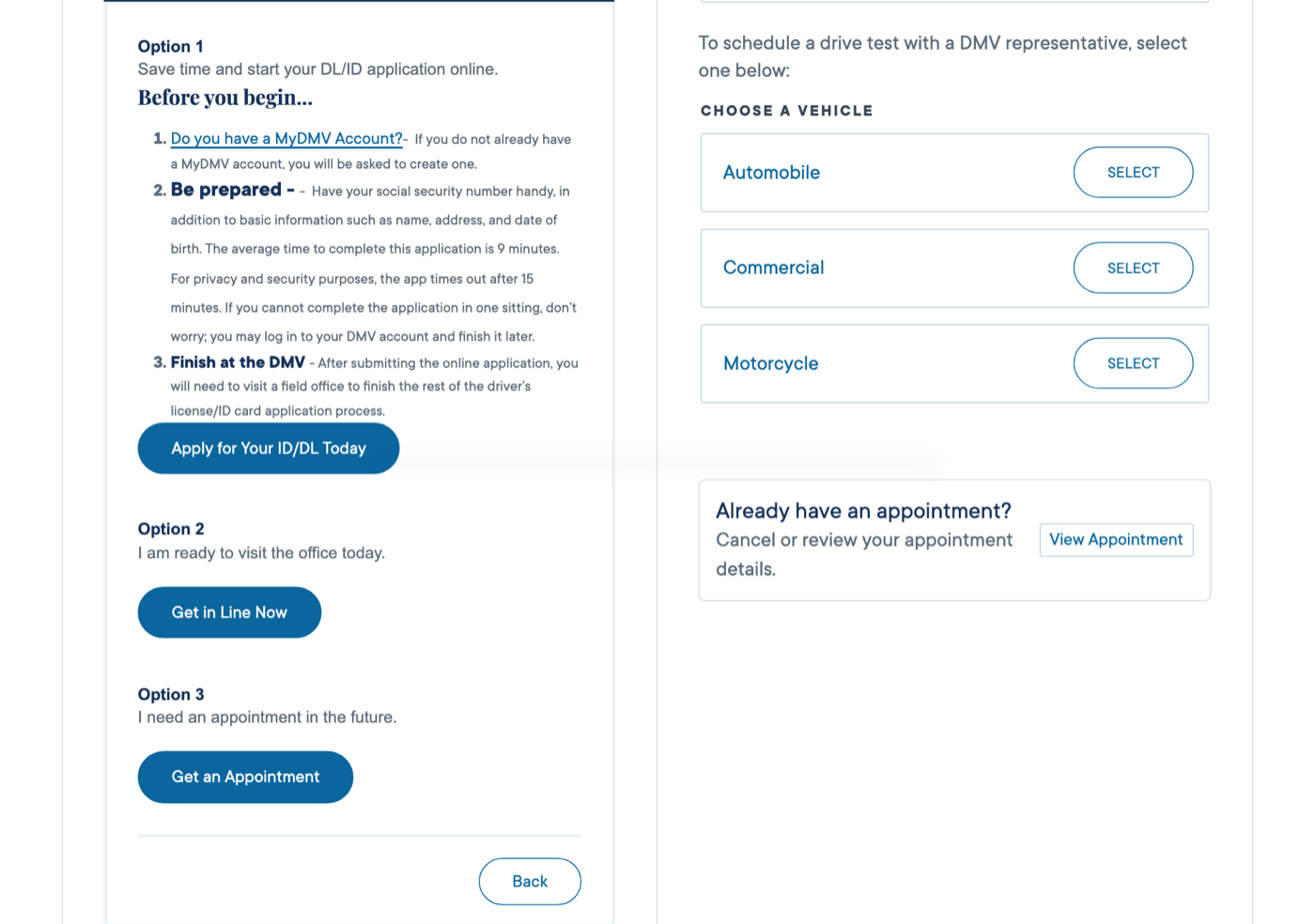
Choose a service and the page replaces the list with three numbered options. They are not alternatives to each other so much as a sequence: start online, then decide whether to go today or book a date.
Option 1: start the application online
For anything involving a license or ID card, the DMV wants the driver's license and ID card application done before you arrive. You need a MyDMV account (two-factor login with an email address and a phone that can take a call or text), your Social Security number, and your basic details. The DMV says the form takes about 9 minutes on average and times out after 15 minutes for security, but a saved application can be finished later and stays valid for up to a year.
If you are applying for a REAL ID, you upload your identity and residency documents during this step. You then bring the originals, plus the confirmation code the DMV emails you, to the office. Field staff use that code to pull up your application. Two details worth knowing: drivers 70 and older must renew in person every five years, and if your visit includes a written test, the DMV does not give tests after 4:30 p.m.
- Your application is already in the system when you check in, so the counter visit is the photo, thumbprint, document check and signature, not the paperwork.
- Uploading REAL ID documents in advance means a missing or wrong document gets caught at home, not at the counter. The REAL ID checklist lists what qualifies.
- The confirmation code works for both a same-day visit and a booked appointment.
Option 2: Get in Line Now, the same-day queue
This replaces the old walk-in. Instead of taking a paper ticket at the office, you join a virtual line for the office you choose and come in when it is your turn. It is meant for people who are ready to visit today. Before you use it, open the wait-times page and look at the non-appointment line for your office: the statewide average was about 33 minutes when we checked, but individual offices ranged from a few minutes to well over an hour.
Option 3: book a date
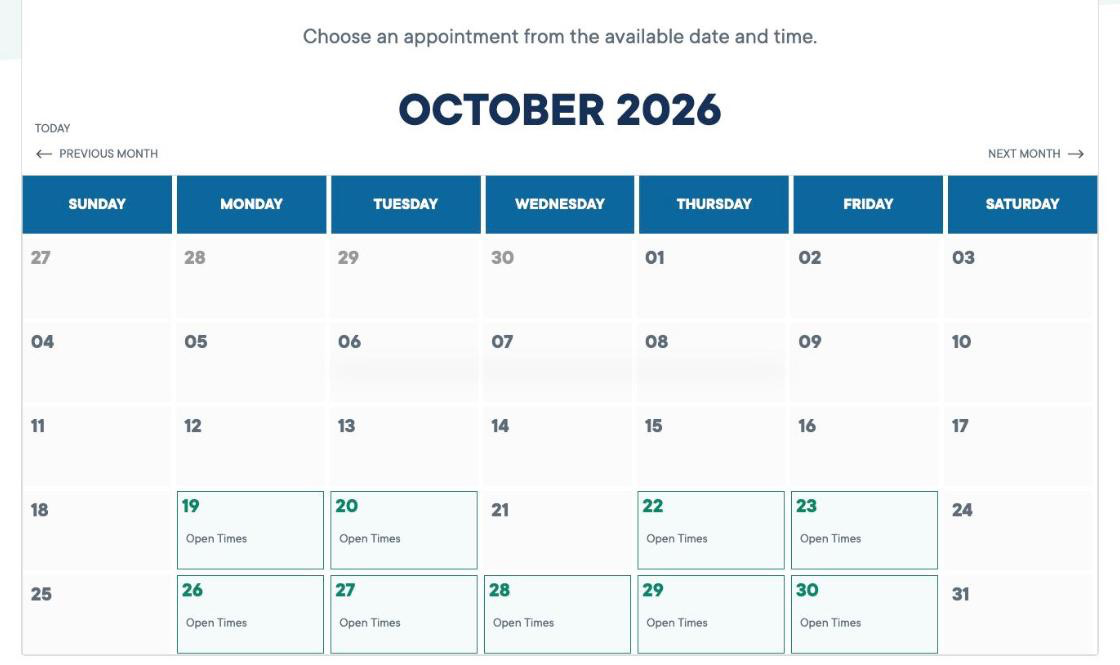
Choose Get an Appointment and the DMV asks which office you want. Any office serves any California resident, so you are not tied to the one nearest your address. Pick one and a calendar shows the days with open times; click a day to see the slots. Enter your details, and the confirmation arrives by email.
The long lead times this guide used to quote are not a given anymore. When we checked on October 16, 2026, the Arleta office in Los Angeles had open times three days out and on most weekdays for the rest of the month. Availability moves daily, so treat that as an example, not a promise. If your first choice shows nothing, check the offices around it before you settle for a date weeks away.
How long is the wait, really?
The DMV publishes it. The current field office wait times page shows a statewide average for appointment and non-appointment visits, then a tile for every office, with tabs for each line and a refresh button. On the afternoon we checked, the state averages were about 10 minutes with an appointment and about 33 minutes without. That gap is the whole argument for booking: an appointment does not skip the office, it skips most of the waiting room.
Use the page the way the DMV intends. Sort by wait time, filter by region, and if your office shows a long non-appointment line, either book a date or get in line now from home so your wait starts before you leave.
Booking by phone
The DMV's main number is 1-800-777-0133. According to the California Driver's Handbook, the automated system runs around the clock and can book an office appointment; representatives are available during business hours. Callers who are deaf, hard of hearing, or speech impaired can use 1-800-368-4327. The phone line is useful when you are booking for a parent or someone without a MyDMV account, but you still need the online application done before the visit if the service involves a license or ID.
What to bring
Four things cover every office visit, and REAL ID adds three more.
For REAL ID, the originals are the identity document (a passport or certified birth certificate, for example), two different proofs of residency in your name, and proof of your Social Security number. The REAL ID document checklist explains what counts and the common mistakes, such as bringing two bills of the same type. If you wear glasses or contacts for driving, bring them: a vision check is part of most license transactions. Fees are listed on the DMV fees page.
Cancel, reschedule, or running late
On the appointment page, the Already have an appointment? box has a View Appointment button where you can review or cancel using your confirmation details. There is no separate reschedule step: cancel, then book again. Do it as soon as your plans change, because open times get taken quickly.
The DMV does not publish a grace period for late arrivals, so treat the appointment time as firm and plan to be there early. If you miss it, you can still use Get in Line Now that day and join the non-appointment queue, or rebook for a later date.
Alternatives when you do not need a visit at all
DMV kiosks. The DMV has 289 kiosks in DMV offices and retail locations. They handle registration renewals with the sticker printed on the spot, replacement registration cards and stickers, driver's license and ID renewals, replacement licenses, driver and vehicle records, planned non-operation filings, and a few payment transactions. Every kiosk takes credit and debit cards with a 1.95 percent service fee, and all DMV office kiosks plus some retail ones take cash. Our kiosk guide walks through a renewal step by step.
Online. Most renewals, address changes, records and registration transactions are available through MyDMV without a visit, including REAL ID renewals for people who already hold one.
Business partners and mail. Licensed DMV business partners handle registration transactions for a service fee, and most renewal notices can still be returned by mail. The office finder lists field offices, kiosks and partners together.
Mobile DMV. The DMV runs mobile units at community events and senior centers for a limited set of license and ID services. Schedules are on the mobile DMV offices page.
Do this, not that
- Finish the online license or ID application before any visit and keep the confirmation code on your phone
- Check the wait-times page for your office before deciding between Get in Line Now and a booked date
- Look at two or three nearby offices if your first choice has no open times
- Bring the original versions of every document you uploaded
- Cancel through View Appointment the moment your plans change, then rebook
- Use a kiosk for registration and license renewals; the counter will not take them
- Don't show up to renew a registration or replace a license at the counter; those transactions are no longer served there
- Don't book a written test for late afternoon; tests stop at 4:30 p.m.
- Don't bring photocopies or two residency documents of the same kind for REAL ID
- Don't assume the next slot is weeks away without opening the calendar
- Don't skip the online application and expect to fill out paper forms; the DMV is phasing them out
- Don't arrive late and expect to be seen; there is no published grace period
If your visit includes the knowledge test, take a free California DMV practice test first. The questions follow the official handbook, and a pass on the first try saves you a second appointment.
Watch: California DMV Practice Test 2026
46 real questions with answers and explanations — follow along or use it to study on the go.