Texas Driver's License Issue Date: Where to Find ISS and What the 8-Year Rule Means
The issue date on a Texas driver's license is labeled ISS and appears on the front of the card. Texas licenses are valid for 8 years for most adults, which means the ISS date can be years in the past on a card that's still current. Here's where to find it, what it means, and how every field on your Texas DL works.
Table Of Contents
- 1. Where to find the issue date on a Texas driver's license
- 2. Date fields on a Texas driver's license
- 3. Texas driver's license validity: 8 years vs 2 years
- 4. What does DD mean on a Texas driver's license?
- 5. Restrictions on a Texas driver's license
- 6. Texas REAL ID and the gold star
- 7. Texas license types
- 8. How to renew a Texas driver's license
- 9. How to find your original Texas licensing date
- 10. Common mistakes when entering your Texas license issue date
Where to find the issue date on a Texas driver's license
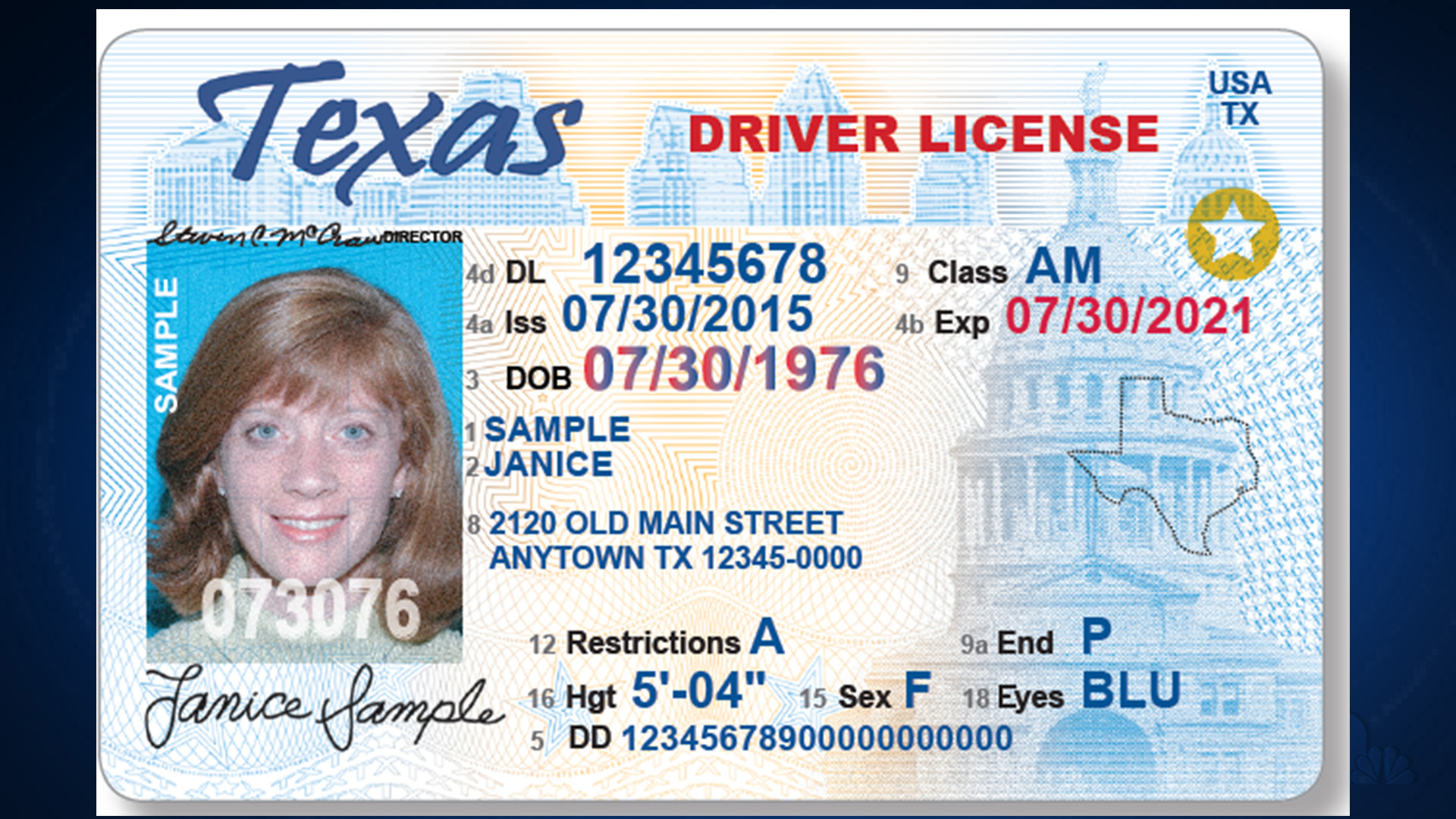
On the current Texas driver's license design, the issue date is labeled ISS and printed on the front of the card. ISS stands for Issue Date and marks when the Texas Department of Public Safety (DPS) issued your current card.
Only 1% of California drivers answer all 3 correctly
Think you know the rules? Most licensed drivers miss at least one.
At 60 mph on a dry California freeway, what is the recommended minimum following distance?
If you've renewed your Texas license, the current card's ISS date reflects the renewal date. Your license number stays the same through renewals, but ISS updates each time a new card is printed.
Preparing for your DMV test?
Download our free iOS app — 1,164+ practice questions in 11 languages, flashcards, and offline study!

Date fields on a Texas driver's license
Texas licenses print three date fields on the front:
- ISS: Issue date. When your current card was issued.
- DOB: Date of birth. Your birthdate for identity and age verification.
- EXP: Expiration date. The date your license expires.
When a form asks for your "driver's license issue date," enter the date next to ISS. When it asks for "date of birth," enter DOB. These are separate fields and often close to each other on the card, making them easy to mix up when reading quickly.
Texas driver's license validity: 8 years vs 2 years
Texas uses a two-tier validity system based on the driver's age:
- Ages 18 to 84: License is valid for 8 years. This is one of the longest terms in the country. Your EXP date will be 8 years after your ISS date.
- Ages 85 and older: License is valid for 2 years. Texas requires more frequent renewals for older drivers, along with a vision test at each renewal.
If you're 30 years old and just renewed your Texas license in 2025, your EXP date is 2033 and your ISS date is 2025. The 8-year gap between ISS and EXP is normal.
What does DD mean on a Texas driver's license?
DD stands for Document Discriminator, a unique serial number for your specific physical card. It changes every time a new card is printed, even when your license number stays the same. Banks, car rental agencies, and identity verification systems use the DD as a secondary check to confirm the card is authentic and hasn't been altered.
If a form asks for a "document number" as a separate field from your license number, it's usually asking for the DD.
Restrictions on a Texas driver's license
Texas licenses show restrictions in the RSTR field. If it shows None, your license has no restrictions. Common Texas restriction codes:
- A: Corrective lenses required
- B: Daylight driving only
- C: No freeway or expressway driving
- E: Automatic transmission only
- H: Licensed to drive hearing-impaired vehicles
- I: Speed restriction (limited to a specific speed)
Violating a restriction on your Texas license is a traffic offense. The Texas DPS website lists all restriction codes and their specific requirements.
Texas REAL ID and the gold star
Texas issues both standard and REAL ID-compliant driver's licenses. A REAL ID-compliant Texas license has a gold star in the upper right corner. From May 7, 2025, a REAL ID or another accepted federal document is required to board domestic flights and enter certain federal facilities.
A standard Texas license without the star works for driving and most everyday ID but not for domestic air travel. To get a Texas REAL ID, visit a Texas DPS Driver License Office in person with: proof of U.S. citizenship or lawful presence, your Social Security card or a document showing your SSN, and two documents showing your Texas address.
Texas license types
Texas issues several license types:
- Class C: Standard non-commercial license for most vehicles
- Class A: Commercial license for large combination vehicles
- Class B: Commercial license for heavy single vehicles including buses
- Class M: Motorcycle license (standalone or combined with Class C)
Drivers under 18 in Texas hold a provisional or restricted license with specific conditions around supervised driving hours and nighttime driving limits.
How to renew a Texas driver's license
Texas offers several renewal options through the Texas DPS:
- Online: Available at the Texas DPS online portal for most eligible drivers. Texas has one of the more flexible online renewal systems in the country, allowing renewal up to two years before your license expires in some cases.
- By mail: Available for some situations, including military personnel stationed out of state.
- In person: Required for first-time REAL ID, new photos, commercial license transactions, and drivers who don't qualify for online renewal.
Texas also has a third-party driver's license offices system for in-person renewals, similar to how some other states handle DMV functions through authorized third-party providers.
- ISS is the label for the issue date on your Texas license. It shows when the DPS issued your current card.
- ISS is not your date of birth (DOB) and not your expiration date (EXP): enter the date next to ISS when a form asks for "license issue date."
- If you renewed your license, the ISS date on your current card reflects the renewal, not your original license date.
- The DD field (Document Discriminator) is a card serial number, not a date: do not enter it as an issue date.
How to find your original Texas licensing date
The ISS date on your current card is when that card was issued, not when you first got a Texas license. If you need your original licensing date for insurance, employment, or a CDL application, request a copy of your Texas driving record through the Texas DPS website. The record shows your full licensing history, original issue date, and any violations or suspensions.
Common mistakes when entering your Texas license issue date
- Use the date next to ISS when any form asks for your "license issue date" or "date issued"
- Check the date format the form expects: some want MM/DD/YYYY, others want YYYY-MM-DD
- If you have a renewed license, use the ISS date on your current card, not the date you first got a license
- Keep a photo of your license on your phone for quick reference when filling out online forms
- Renew your license before the EXP date: many employers and landlords reject a license within 60 days of expiry
- Update your address within 30 days of moving to keep your license record current
- Don't enter your DOB (date of birth) when a form asks for the issue date: they are completely different fields
- Don't enter your EXP (expiration date) as the issue date: expiration is when the license ends, not when it was issued
- Don't use the issue date from an old expired license if you have a current one
- Don't enter the DD (Document Discriminator) number as your issue date: it's a card serial number, not a date
- Don't guess the date if you can't read your license clearly: order a replacement to avoid entering incorrect information
- Don't assume the issue date is the same as your birthday: they are unrelated